| personal relationships |
|
|
 |
ACTIVITIES:
|
|
|
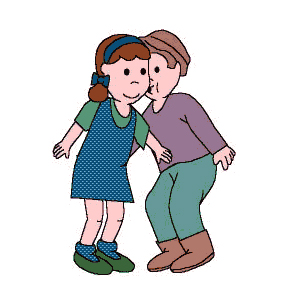 |
| Title: 1. This kiss is for you |
| We Work on: |
|
- Expression of emotions and affection
- Participation
|
| ACTIVITY DEVELOPMENT: |
| Everyday all of us have to love everybody; today we are going to try to love each other even more than usual. |
|
Let's learn a small poem and play with it:
One and two,
This kiss is for you
Everybody has to participate; we can play sitting down on the floor:
- A child recites the poem and decides who is his/her kiss for. He/she stands up and goes toward his/her mate to kiss him/her. Then he/she sits down beside the "lucky" mate.
- Any child can start; he/she says "one", the person on his/her right says "two" and the next child says "this kiss is for you"; this third person has to kiss the mate on his/her right.
The boy/girl who has been kissed starts the game again.
P.D.: Apart from the kiss, the child can offer other affection signs (hugs, tickles, strokes...)
|
 |
 |
|
|
| |
 |
| Title: 2. If you are Ok, I am Ok, too |
| We Work on: |
|
|
| ACTIVITY DEVELOPMENT: |
Today we are going to play to mime different faces. Our different faces mean that sometimes we feel in one way and sometimes in other ways.
|
|
The ideal game would work as follows: eight or ten children split up into couples. Each member of the couple has to be in front of the other one so that both can see each other's face.
The teacher whispers some feelings to one of the members of each couple. These pupils have to express those feelings with their faces and hands. When the partner guesses what the first child was miming, he/she will say and do something to help, share and cheer up his/her mate:
- If the mate is SAD: "I also feel sad" and then he/she strokes him/he
- If the mate is AFRAID: "Uuuuh, I am also afraid" and he/she gives his/her partner a hug
- If the mate is TIRED: "Uuuf, I also feel tired" and he/she fondles his/her mate's back
- If the mate is ANGRY; "Uuuf, I am also angry"; both fold their arms and then hold their hands
- If the mate feels COMFORTABLE: "Mmmm, me too!" and they fond one another
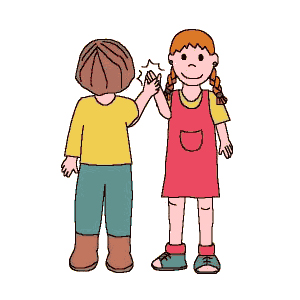
- If the mate is HAPPY: "Uuuuh, me too!" and they "give each other five"
The teacher will let the children to express themselves as they want to; in case they don't know how to express some circumstances he/she will help them |
|
|
|
|
| |
 |
| Title: 3. I´ll help you |
| We Work on: |
|
- Development of cooperative habits
- Commitment
- Responsibility
|
| ACTIVITY DEVELOPMENT: |
| Sometimes we don't know how to do some things, but if we are helped we will learn them for the next time and we will also feel better |
|
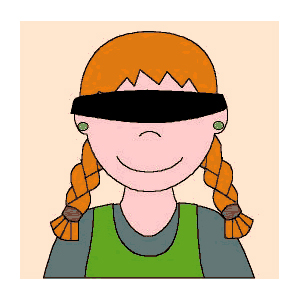
One child is the "guide" and another one has his/her eyes covered, as if he/she was blind. The rest of the group just observes the situation".
The teacher says to the "blind" child: "please, come here" from anywhere in the classroom. When he/she tries to get there, he/she falls down, stumbles... Wouldn't it be easier if someone helped him/her?
Now both children hold their hands and move towards the teacher. Isn't it easier in this way? Do you like the fact of being helped?
As you can see everybody should help everybody else. All of us can be "guides" in several occasions" |
|
|
|
|
| |
| |
 |
| Title: 4. We say hello to our mates because we love them |
| We Work on: |
|
- Respect for the rules
- Proper behaviours
- Development of cooperative habits
|
| ACTIVITY DEVELOPMENT: |
| All the children sit down on the floor in a circle. Everybody puts his/her right hand on the shoulder of the person on his/her right (the teacher will help those children who don't distinguish between left and right). |
|
Any of them will start the game, telling the mate he/she is touching:
Hello, what's your name?
and when this person answers, all the group will sing the following, while clapping:
Hello Michael! How are you?
I am fine, thank you. What about you?
From now on the two children will be friends; to celebrate it they kiss or hug each other.
The child that has been asked starts the game again
|
|
|
|
|
| |
 |
| Title: 5. We are equal, we are different |
| We Work on: |
|
- Appreciation of the differences between people
- Interest in sharing
- Participation
|
| ACTIVITY DEVELOPMENT: |
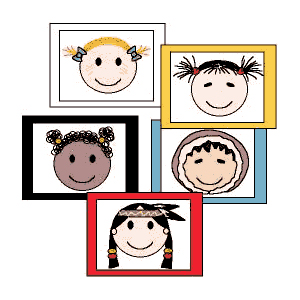
| Print the illustrations from document 1, document 2 and document 3 and show them to the children. |
|
The teacher will talk about the different races in the world: there are several races in our planet, and people from these races have different type of hair, skin, eyes, height...
We are physically different from other people, but everybody is similar in his/her heart to everybody.
Previously the teacher has to prepare coloured cards; each colour will be identified with a race.
The teacher will give the cards to the children at random. While some "soft" songs are played the children will move throughout the classroom. They will look for the other children that have cards of the same colour of theirs. When they find those children, all of them will hold their hands.
When all the groups are formed everybody will make a circle.
Two or more children from the same race can't be together in the circle.
The circle represents the world, and the children represent all the different races in the world |
|
|
|
|
| |
 |
| Title: 6. Let´s cross the river |
| We Work on: |
|
- Appropriate behaviours
- Commitment
- Cooperation
- Participation
|
| ACTIVITY DEVELOPMENT: |
You can play this game in an open space or in a big area in the classroom.
|
|
The entire group can play at the same time or the children can be split up into groups and play in turns.
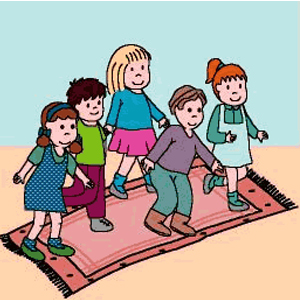
We imagine we are in a forest and suddenly we see a river just in front of us (the river or the lake can be drawn on the ground or on a very big mural: you can also place a rug or something similar on the floor). We have to cross it, watching our steps to avoid falling down.
We will cross the river while the music sounds. When the music stops the children who are crossing the river at that very moment will lie down, as if they had fallen down.
These children need help, so their mates who are on the banks will throw them a string and tugging them until they reach the bank; they will rest in there.
The game will be over when everybody is resting on the banks, thanks to their mates' help |
|
|
|
|
| |
|
| |
 |
| Title:7. This is for you |
| We Work on: |
|
- Respect to the mates
- Interest in sharing
- Expression of affection
- Commitment
|
| ACTIVITY DEVELOPMENT: |
| The teacher asks the children to work in pairs (they should work with some mates they don't usually have relationship with). |
|
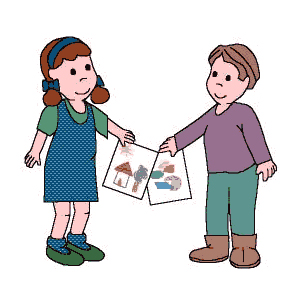
Today you are going to give a very special gift to your mate. This gift is a ; when the drawing is finished, both of you will give it to your partner. When you offer the gift, you will say some magic words. These magic words will provoke that the members of each couple become friends forever and they are "This drawing is a gift for you; here you are.
The person who receives the gift has to make some gratefulness expression to get it
|
|
|
|
|
| |
 |
| Title: 8. Magic words |
| We Work on: |
|
- respect to the rules
- Participation
|
| ACTIVITY DEVELOPMENT: |
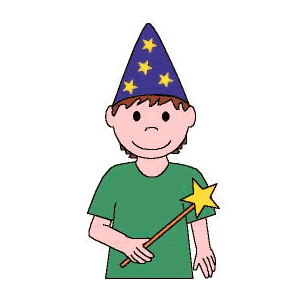
| A child will be the wizard, and the rest of the group has to "obey" the wizard every time he/she uses the magic words: "please" and "thank you". |
|
The children will move throughout the classroom according to the rhythm of the music (or the rhythm the teacher marks by clapping or with any instrument).
When the music stops the entire group turn into statues.
The wizard touches each statue with a magic wand and says "please, become the animal or the object you have always wished to be" (he/she doesn't have to forget the magic words).
When all the statues have fulfilled the wishes, the wizard will thank them for their actions and the children will start moving through the room again, following the rhythm. At this moment the wizard gives the magic wand to the person who carried out the order in the best way. Then the game starts again.
If the wizard doesn't say the magic words hr/she will have to leave the game |
|
|
|
|
| |
 |
| Title: 9. My family |
| We Work on: |
|
- Respect to adults
- Expression of affection and emotions
- Interest in sharing
|
| ACTIVITY DEVELOPMENT: |
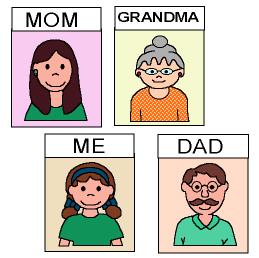
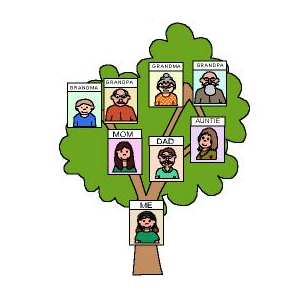
Let's prepare a genealogical tree.
|
|
ach child has to draw his/her family on a piece of paper (parent, grandparents, brothers and sisters, aunts and uncles). Then they will cut the images and give them to the teacher, explaining him/her who is each character. The teacher will write their names on the back of the drawings (the older children can do it by themselves).
After this, the children will draw and colour a tree on cardboard; the teacher will help them to glue the images.
Each child, showing his/her composition, will explain to the rest of the group their characteristics: their names, the things those people share with them, what they do, if they (the children) behave in a proper way with them and if they follow their advice....
Each child must show the composition to his/her parents and explain it to them. |
|
If they wish they can bring it to the class again to hang it on one of the walls of the classroom |
|
|
|
|
| |
 |
| Title:
10. My friends and me |
| We Work on: |
|
- Expression of affection
- Interest in sharing
|
| ACTIVITY DEVELOPMENT: |
| The teacher will print the supplementary material (click here to open in a new window) and will give it to the children. Then he/she will ask them: |
|
- What are your friends' names?
- What do you like about your friends?
- What can we do with our friends?
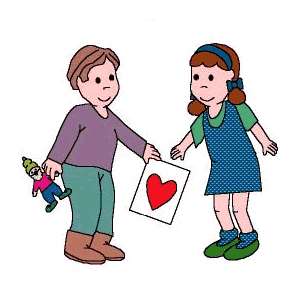
Today we are going give a gift to a boy or a girl who is not our friend: a heart and something else.
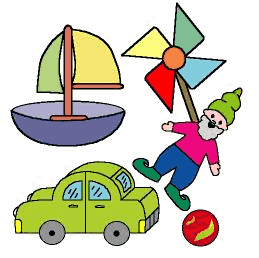
Today we will colour the heart with watercolours, pencils, crayons... And tomorrow we will present it (or even today if we think about the other thing we are going to give the other person apart from the heart). The child will give his/her present to a child from the other class: the heart and a small ball or a marble, a small car...
We will go to the other classroom and each child will give the present to another child, telling the new friend what's his/her name and asking him/her about his/hers.
The teacher has to check if all the children have got presents. |
|
|
|
|
| |
 |
| Title: 11. We both have to do it |
| We Work on: |
|
- Development of cooperative habits
- Interest in sharing
- Respect to the rules
|
| ACTIVITY DEVELOPMENT: |
| We want the children to learn that usually teamwork is easier, funnier and more useful than individual work. |
|
We want the children to learn that usually teamwork is easier, funnier and more useful than individual work. We also want to teach them that they always have to help each other. In this way we will make them work in pairs.
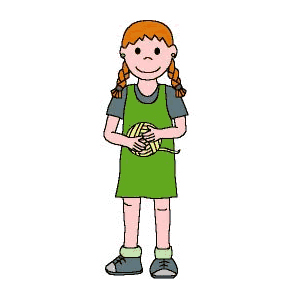
The teacher will bring a wool skein into the class.
A child will try by himself/herself to wind the skein. Oh, my goodness! What a mess! The wool skein is getting tangled! The child needs help.
The teacher asks the rest of the group: "Who wants to help him/her?". Then, the volunteer will hold the skein and the other pupil will wind it.
These two children start the dynamic, but all of them will take turns to participate in it |
|
|
|
|
| |
 |
| Title: 12. They are my fingers |
| We Work on: |
|
- Expression of affection and emotions
- Appreciation of differences between people
|
| ACTIVITY DEVELOPMENT: |
| Today we are going to play with puppets. |
|
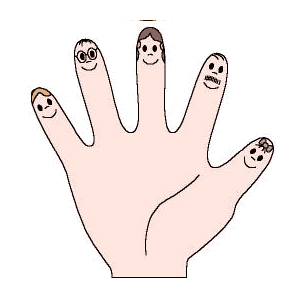
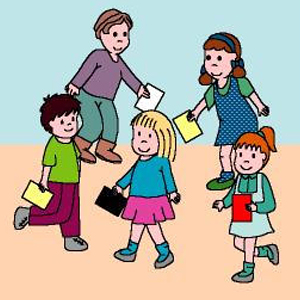
Each one of the fingers of one hand (or some fingers of both hands) will be one member of our family: daddy, mummy, grandma, grandpa, our brother, me... (we will decorate our fingers by drawing eyes, mouths, noses... on them).
The teacher will name several combinations:
"Mummy loves daddy", "mummy loves me", "grandpa loves daddy", "mummy and daddy love grandma and grandpa", "all of us love the entire family", ... And when someone loves someone else, they kiss each other (children have to join the correspondent fingers, as if the fingers were kissing one another) |
|
|
|
|
| |
 |
| Title: 13. A trip around the world |
| We Work on: |
|
- Appreciation of differences between people
- Respect to the rules
- Proper behaviours
|
| ACTIVITY DEVELOPMENT: |
We need several coloured cards: red, yellow, black and white ones.
|
|
Each child has several card of the same colour. The game consists on walking through the world (the classroom), while listening to some music.
The children meet people from other countries and races (depending on the colour of the card). When a child meets a "foreigner", they both have to greet each other and exchange their cards.
They continue travelling around the world, meeting and greeting people from other races.
Any of them (teacher or children) can suggest different kinds of greetings for the meetings:
- Red card: to rub each other's noses, as Eskimos do.
- Yellow card: to bow in front of the new friend, as Japanese people do.
- White card: to give the new friend three kisses, as Russians do.
- …
At the end of the game each child has to show how many cards he/she has and what kind of greetings he/she has used |
|
|
|
|
| |
 |
| Title: 14. Pass it on |
| We Work on: |
|
- Expression of affection and emotions
- Participation
|
| ACTIVITY DEVELOPMENT: |
Everybody sits down on the floor in a circle.
|
|
The teacher starts the game giving an affectionate and creative caress to the pupil on his/her right (it should be a "contact caress").
This pupil will "pass on" the caress (he/she will do the same thing the teacher did to the person on his/her right) and so on.
When the teacher receives the caress, it will be the turn of the person on his/her right to invent another caress and start the game again. All will be over when the entire group has invented an affectionate caress |
|
|
|
|
| |
 |
| Title: 15. An island in the middle of the ocean |
| We Work on: |
|
- Responsibility
- Respect to the rules
- Development of cooperative habits
- Commitment
|
| ACTIVITY DEVELOPMENT: |
The children will take part of the game in groups of about ten children (when it's not their turn they must observe and imitate the different roles).
|
|
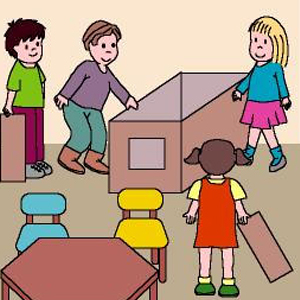
We are travelling in a huge ship; suddenly, the ship crashes against something and begins to sink. We save our lives because we jump into a small boat and row towards an island we have just seen in the middle of the ocean. In the island everybody has to help everybody else in order to survive:
- A child is a carpenter and builds the house; the rest of the children help him/her to find some pieces of wood and different materials he/she needs.
- A child is a plumber and makes some pipes to carry some water into the house. The rest of the group helps him/her to do it.
- Another child is a cook and the rest of them help him/her to get the aliments: they are hunters and fishers.
- Another member of the group is a farmer and he/she plants some seeds. He/she will be helped by his/her mates.
- A child is a doctor and he/she cures the injuries while the other children help him/her.
- ...
We will build the house with the different materials we can find in the classroom |
|
|
|
|
| |
 |
| Title: 16. I don´t want to change! |
| We Work on: |
|
- Appreciation of differences between people avoiding
- Respect to the mates and adults
|
| ACTIVITY DEVELOPMENT: |
The teacher tells a tale
|
|
A squirrel was resting on the branch of a tree, when suddenly a rhino hit the tree and the small squirrel fell down. It was so afraid...! Then the rhino laughed and it went away without apologising.
There was a mouse inside a drawer (its house), when suddenly... a rumble provoked the mouse to be so afraid... It was a lion roaring. “Big animals have to help the small ones ”, said the mouse; but the lion laughed and it went away without apologising.
A frog sat on its leaf when suddenly... a crocodile gnashed its teeth. “Please, stop doing that, because the flies are escaping, and I have to eat”, said the frog; but the crocodile laughed and went away without apologising.
At night there was an animal reunion in the woods. The small animals spoke:
- I want to become a big animal to take revenge on the rhino!, said the squirrel
- I want to become a big animal to take revenge on the lion!, said the mouse!
- I want to become a big animal to take revenge on the crocodile!, said the frog.
However, the rest of the small animals were happy being as they were and they didn't want to become big animals:
The grasshopper was happy because it was small, agile and difficult to hold when it jumped. The hedgehog liked its quills. And the snail liked its house...
When they woke up in the morning something had happened: the squirrel had become a SUPERSQUIRREL, the mouse now was a SUPERMOUSE and the frog was a SUPERFROG. At the same time, the rhino has become a MINIRHINO, the lion now was a MINILION and the crocodile was a MINICROCODILE.
It was hard for the SUPERSQUIRREL to get used to the new life, because all the branches broke down because of its weight. Now it only thought about becoming a small squirrel again. It regretted having thought about revenge.
The MINIRHINO lived scared. When it hit the trees the pain was awful. So it regretted its arrogance and bad mood.
The SUPERMOUSE couldn't enter in the mousehole so it had to build a new one. It regretted having thought about revenge.
The MINILION couldn't hunt any prey, so it was very hungry. Now it only could eat some grass. It regretted its arrogance.
The SUPERFROG was huge, but the flies still were small, so it was very hungry. So it regretted having thought about revenge.
The MINICROCODILE was afraid of going into the water because some fishes could eat it; besides it was terrible when the SUPERFROG croaked. Then it regretted its arrogance.
All the animals prepared another animal reunion. The six animals that had suffered changes saw the point of what they had provoked and they promised not to be unfriendly again:
The crocodile would never frighten any animal again. And the rhino would never hit the trees again. And the lion would never roar again to frighten the animals.
When all of them woke up the following day things were as they always had been: the squirrel, the mouse and the frog were small again and the lion, the rhino and the crocodile were big animals.
From that day on all of them were friends.
When the tale is finished the teacher will ask the children about the things that take place in the story and about which things from other people they would like to have and why.
*Adapted from: "The forest of the thousand shadows" by Mischa Damjan and Hans de Beer; Lumen Publishers, 199
|
|
|
|
|
| |
 |
| Title: 17. I play with my toys |
| We Work on: |
|
- Responsibility
- Interest in sharing
|
| ACTIVITY DEVELOPMENT: |
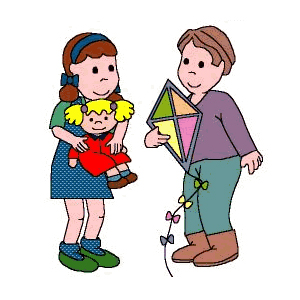
The teacher asks the children to bring into the classroom their favourite toy.
|
|
Each child will show it to his/her mates and talk about it:
- What's its name?
- What is it like?
- What does it do?
- What is it for?
- ...
The teacher will ask them if they take care of the toys, if they put the toys in the right place when they are tired of playing with them...
After all of them have shown their toys, the children will interchange them. The children will play with a borrowed toy for a while and then they will answer the following questions:
- Who has borrowed your toy?
- Which toy have you been playing with?
- Have you liked it?
- Have you treated the toy well?
Has your toy been treated well? The teacher will give a "smiley-face" sticker to all the children who have been careful with their mates' toys. It's very important to share our things with others and to care for borrowed things |
|
|
|
|
| |
 |
| Title: 18. A friend and another one |
| We Work on: |
|
- Proper behaviours
- Expression of affection
- Participation
|
| ACTIVITY DEVELOPMENT: |
The teacher will talk about the importance of having and being good friends.
|
|
He/she will ask the children about their friends: if they have friends, what are they like (tall, short, thin, chubby, blonde, dark-haired...), what do they usually do together...
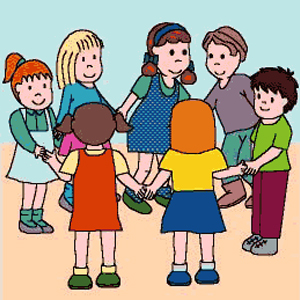
Now they are going to play to make new friends: everybody is going to dance according to the music. When the music stops each child will move towards the nearest mate and ask him/her the name: "What's your name? My name is _______ ; and you? My name is _______ ". They will kiss each other and hold their hands as a friendship sign.
The music will be played again and everybody will dance with his/her new friend. When the music stops again, the couple will look for another couple to introduce themselves.
The game will be over when the entire group dance together the "friendship dance", while singing
Now we all are friends,
So let's laugh and dance |
|
|
|
|
| |
 |
| Title: 19. We will understand one another if we want to |
| We Work on: |
|
- Appreciation of differences between people, avoiding
- Development of cooperative habits
|
| ACTIVITY DEVELOPMENT: |
| What would happen if we always had our eyes closed? Let's close our eyes and walk around the classroom to see what happens. |
|
Ask the children to tell the rest of the group what have they felt: if they could see, if they were afraid, if they felt safe...
At this moment the teacher will talk about some people (children and adults) who can't see. How can we help them? (Offering them our hand, explaining to them how are the things around us, telling them where they can find some obstacles...).
The teacher will help the children to discover the different ways we have to help blind people. He/she will also talk about the blind man's guide-dogs, about the walking sticks they use, about the sound of the stop-lights that let them know when they can cross the street...
Now let's cover our ears. What happens? Children will comment on the things they have felt.
Then the teacher will talk about some people who can't hear anything and about some of them who can't speak. These persons have to learn a sign language to communicate with the rest of the people. The teacher can teach some words in this language (it is different in each country) that he/she has previously learnt.
When the children learn the words in the "new" language, they will play to make new friends by using them |
|
|
|
|
| |
 |
| Title: 20. Solving our problems |
| We Work on: |
|
- Solution of problems
- Proper behaviours
- Interest in sharing
|
| ACTIVITY DEVELOPMENT: |
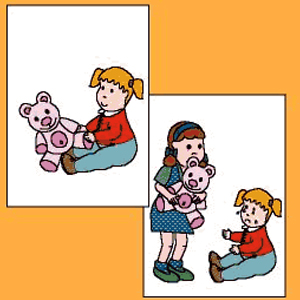
Print the illustration of the supplementary material (click to open in a new window).
|
|
The teacher will show the illustrations to the children. They have to observe and comment on what is happening there:
- What is happening here?
- What has the eldest child done?
- Why is the youngest child crying?
- Is this a proper behaviour?
- What should have been his behaviour?
- ...
- What are the children on the other drawing doing?
- Why are they fighting?
- Do you think fighting is a good thing?
- What should they do instead fighting?
- ...
The teacher can present more conflictive situations. The children have to suggest ways to solve them.
It would be a god thing to talk about some conflictive situations that have taken place in the classroom |
|
|
|
|
| |
|
|
 |